
Il dibattito sull’Intelligenza artificiale tiene ormai banco in tutti i Parlamenti europei e sta conquistando sempre più le prime pagine dei media dell’intero pianeta. Gli ultimi ritrovati della “robotica intelligente”, infatti, hanno appena oltrepassato le frontiere della scienza superelettronica, ma, nello stesso tempo, essi prospettano temibili effetti collaterali. Pensiamo ad esempio a un futuro in cui l’intero lavoro umano venga totalmente soppiantato dalla robotica. La produttività crescerebbe in modo esponenziale, ma la riduzione dei posti di lavoro sarebbe altrettanto drastica. I cervelloni elettronici rischiano dunque di togliere alla regia umana la sua prerogativa prettamente creativa e ideatrice. E allora, cosa accadrà il giorno in cui un computer sarà in grado di “capire” o perfino di leggerci nel pensiero? Chi prevarrà: il supercalcolo elettronico che processa in un nanosecondo trilioni di dati o l’esperienza, l’intuito e le emozioni umane? Queste sono le domande a cui nei prossimi mesi la scienza e la politica planetaria devono dare delle risposte concrete.

Nel frattempo, per capirne di più abbiamo fatto un viaggio molto particolare. Siamo andati nel luogo dove l’Intelligenza artificiale ha avuto inizio, siamo così “ritornati nel futuro”. Guida d’eccezione nel nostro avvincente viaggio nell’archeologia del calcolo meccanico e delle emozioni umane, è stata il direttore generale del Museo Archeologico Nazionale di Atene, Anna Vasiliki Karapanagiotou che, seppur impegnata in questi giorni in un elaborato scavo archeologico in Arcadia, ha trovato il tempo per dedicarsi alle nostre curiosità e rivelare in esclusiva a Città Nuova i segreti e il funzionamento di Antikythera.
Antikythera! Chi era costui?
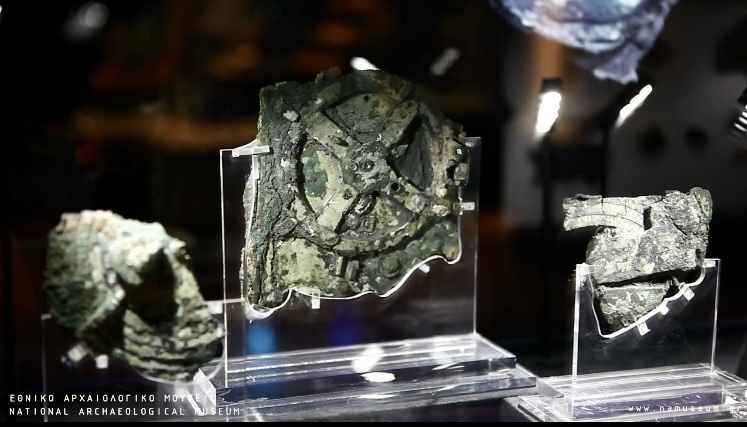
Se qualcuno crede ancora che il calcolatore analogico sia un’invenzione dell’era moderna, è proprio il caso di dirlo, ha fatto male i suoi “calcoli”! «Il cosiddetto Meccanismo di Antikythera – ci ha spiegato infatti Anna Vasiliki Karapanagiotou direttrice del Museo Archeologico Nazionale di Atene ˗ era un sofisticato dispositivo di bronzo, del mondo greco antico, datato II secolo a.C. e aveva le dimensioni di un computer portatile. Le funzioni di base di questo meccanismo ad ingranaggi erano di calcolare e visualizzare con precisione il movimento del sole e della luna, le date del ciclo quadriennale dei giochi olimpici e prevedere le eclissi».Si tratta dunque di un marchingegno davvero straordinario, ma ci sfugge ancora il significato del suo nome. «L’antico relitto che trasportava il Meccanismo di Antikythera – spiega Anna Vasiliki Karapanagiotou – fu trovato per caso, nell’aprile del 1900, da pescatori di spugne, vicino alla piccola isola greca di Antikythera, conosciuta in Italia come Anticitera o Cerigotto». Da allora quell’ingegnoso strumento non finisce di incuriosire. «Antikythera – prosegue Anna Karapanagiotou – è conosciuto in tutto il mondo come il “primo computer” dell’umanità ed è esposto al Museo Archeologico Nazionale di Atene, in Grecia, ed è in realtà uno dei punti salienti del museo». E allora è proprio da qui che partono le nostre ricerche. «La scoperta di questo sofisticato dispositivo – spiega ancora Karapanagiotou – è una testimonianza dell’elevata conoscenza astronomica degli antichi greci e delle loro eccellenti capacità meccaniche. Secondo il mio pensiero questo è il miglior esempio di intelligenza artificiale del passato». Intelligenza artificiale e archeologia: un’“applicazione” vincente!In realtà il termine archeologia suona “arcaico” rispetto a quello di “intelligenza artificiale” che ha un’accezione tutta moderna. «Che relazione c’è tra di esse?». «Beh! – sostiene la direttrice Karapanagiotou – negli ultimi decenni, la ricerca archeologica ha fatto passi da gigante utilizzando le nuove tecnologie. Lo studio di ieri è in rapida evoluzione proprio grazie all’intelligenza artificiale». La miglior prova poi della reciproca “collaborazione” tra archeologia e AI che sta per Artificial Intelligence, la dottoressa Karapanagiotou ce la fornisce parlandoci in anteprima europea di un’“applicazione” di ultima generazione, di cui il museo archeologico nazionale di Atene da lei diretto, si è dotato proprio nei giorni della nostra intervista e che si attiva cliccando sul seguente link: https://antikythera-mechanism.namuseum.gr/en/.
L’abbiamo subito sperimentata e non ce ne siamo più separati. È un ingegnoso sistema didattico-informativo che consente di apprendere i misteri di Antikythera. È un’“app” utile ai giovani studenti che vengono guidati alle professioni attinenti ad Antikythera, ma è utile anche agli addetti ai lavori a cui fornisce spiegazioni dettagliate e tecniche sulla storia e sul funzionamento della “logica profonda” di Antikythera.
In Arcadia, dove nasce l’“archeologia delle emozioni”
Siamo così diventati molto familiari con Antikythera e i suoi ingegnosi ingranaggi. Abbiamo capito e sperimentato, attraverso la sua moderna riproduzione custodita sempre nel museo archeologico di Atene, come funzionava, come prevedeva le eclissi e ricordava le fasi solari e lunari; abbiamo decifrato le iscrizioni in greco antico incise sulla sua custodia lignea, su come utilizzarlo. Ma soprattutto abbiamo capito che intelligenza artificiale e ingegno umano devono essere sempre in equilibrio e sincronia tra loro, proprio come gli ingranaggi di Antikythera.
E su questa “rivelazione” finale ci accorgiamo che il nostro viaggio volge al termine. Ma prima di fare ritorno, scopriamo che la nostra guida d’eccezione, Anna Vasilika Karapanagiotou è originaria dell’Arcadia, la magnifica regione del Peloponneso centrale, una terra ricca di cultura e poeticamente associata a una visione idilliaca e armoniosa della vita.
«Che sensazioni prova – chiediamo ad Anna Karapanagiotou – lei, una donna arcadica, se pensa che in un futuro non troppo lontano, in un sito di scavo invece di trovare archeologi in tuta e badile ci saranno solo dei sofisticatissimi robot?»
«Negli ultimi 30 anni – risponde Anna Karapanagiotou – ho partecipato e diretto ricerche di scavo in Grecia. Ho anche partecipato a un progetto di ricerca archeologica a Sibari, nell’Italia meridionale (2009-2010). L’archeologia è una scienza che guarisce l’anima umana. Per questo credo che nulla possa sostituire l’emozione umana».
Traduzione dell’articolo in inglese
Antikythera, the mechanism that gave birth to artificial intelligence
It’s the new challenge of the 21st century: artificial intelligence against human mind. Who will dominate the millennium scenario, the “thinking” supercomputers or the creativity of man? To discover it, we went to Greece, where it all began.
An exceptional guide for “Città Nuova” has been the general director of the National Archaeological Museum of Athens, Anna Vasiliki Karapanagiotou. She said: «I believe that nothing can replace human emotion»
The debate on artificial intelligence is now taking stage in all European parliaments and is increasingly conquering the front pages of the media across the planet. The latest discoveries of “intelligent robotics”, in fact, have just crossed the frontiers of super-electronic science, but, at the same time, they have shown fearsome side effects. Let’s think, for example, of a future in which all human work is totally replaced by robotics. Productivity would grow exponentially, but job losses would be just as drastic. The electronic brains therefore risk of taking away from human control its pure prerogative of creativity. So what will happen the day a computer is able to “understand” or even read our minds? Who will prevail: electronic supercomputing that processes trillions of data in a nanosecond or human experience, intuition and emotions? These are the questions to which science and planetary politics must give concrete answers in the coming months.
In the meantime, to understand more, we made a very particular journey. We went to the place where artificial intelligence originated, we did thus “returned to the future”. Exceptional guide on our enthralling journey through the archeology of mechanical calculation and human emotions, has been the general director of the “National Archaeological Museum of Athens”, Anna Vasiliki Karapanagiotou who although very busy in an elaborate archaeological excavation in Arcadia, found the time to dedicate to our curiosities and reveal exclusively to “Città Nuova” the secrets and functioning of “Antikythera”.
«Antikythera! Who was he?»
If someone still believes that the analog calculator is an invention of the modern era, it is appropriate to say, they have made their “calculations” wrong!
«The so-called Antikythera Mechanism – Anna Vasiliki Karapanagiotou, director of the “National Archaeological Museum of Athens” explained to us – was a sophisticated bronze device, from the ancient Greek world, dated to the 2nd century BC. and was the size of a laptop. The basic functions of this gear mechanism were to accurately calculate and display the movement of the sun and moon, the dates of the four-year cycle of the Olympic Games and to predict eclipses»
It is therefore a truly extraordinary contraption, but the meaning of its name we still don’t know it.
“The ancient wreck carrying the Antikythera Mechanism – explains Anna Vasiliki Karapanagiotou – was found by chance, in April 1900 by sponge fishermen, near the small Greek island of Antikythera, known in Italy as Anticitera or Cerigotto”.
Since then that ingenious devise has never ceased to intrigue.
“Antikythera – continues Anna Karapanagiotou – is known worldwide as the ‘first computer’ of humanity and is exhibited at the ‘National Archaeological Museum of Athens’, Greece, and is actually one of the highlights of the museum».
And this is where our research focuses.
«The discovery of this sophisticated device – explains Karapanagiotou – is a testimony to the high astronomical knowledge of the ancient Greeks and their excellent mechanical capabilities. In my opinion this is the best example of artificial intelligence of the past».
Artificial intelligence and archeology: a successful “application”!
In reality, the term archeology sounds “archaic” compared to that of “artificial intelligence” which has an entirely modern meaning.
What is then the relationship between them?
«Well!, – says the director Karapanagiotou – in recent decades, archaeological research has made great strides using new technologies. Yesterday’s study is rapidly evolving thanks to artificial intelligence».
Dr. Karapanagiotou provides us with the best proof of the mutual “collaboration” between archeology and “AI” which stands for “Artificial Intelligence”, by telling us in a worldwide exclusive of a latest generation “application”, of which the National Archaeological Museum of Athens, is being equipped with just in the days of our interview and which can be activated by clicking on the following link: https://antikythera-mechanism.namuseum.gr/en/
We immediately experimented and we never separated from it. It is an ingenious educational-information system that allows you to learn the mysteries of Antikythera. It is also an “app” useful for young students who are guided to the professions related to Antikythera, but it is also useful for insiders to whom it provides detailed and technical explanations on the history and functioning of the “deep logic” of Antikythera.
Arcadia, where the “archeology of emotions” is born
We have thus become very familiar with Antikythera and its ingenious gears. We understood and experienced, through its modern reproduction also kept in the archaeological museum of Athens, how it worked, how it predicted eclipses and remembered the solar and lunar phases; we have deciphered the Ancient Greek inscriptions on how to use it, engraved on its wooden case. But above all we understood that artificial intelligence and human ingenuity must always be in balance and synchrony with each other, just like the gears of Antikythera.
On this final “revelation” we realize that our journey is coming to an end. But before leaving, we discover that our exceptional guide, Anna Vasilika Karapanagiotou is original from Arcadia, the magnificent central Peloponnese region, a land rich in culture and poetically associated with an idyllic and harmonious vision of life.
«How do you feel – we ask Anna Karapanagiotou – as an Arcadian woman, if you think that in the not too distant future, on an excavation site instead of finding archaeologists in overalls and shovels, there will only be highly sophisticated robots?».
«Over the last 30 years – says Anna Vasilika – I have participated in and directed excavation research in Greece. I also participated in an archaeological research project in Sibari, southern Italy (2009-2010). Archeology is a science that heals the human soul. This is why I believe that nothing can replace human emotion».
_